


Handling 300+ invoices a month with manual billing creates predictable headaches: late sending, typos, wrong GST rates, endless follow-ups, and payment delays that strain cash flow.
Finance heads don’t need generic benefits you need real numbers showing how much billing automation can reduce costs, speed up processing, and tighten working capital.
This practical guide breaks down billing automation cost vs. savings, with examples for Indian SMEs. By the end, you’ll see how automating your invoicing pays back and how fast it can impact your bottom line.
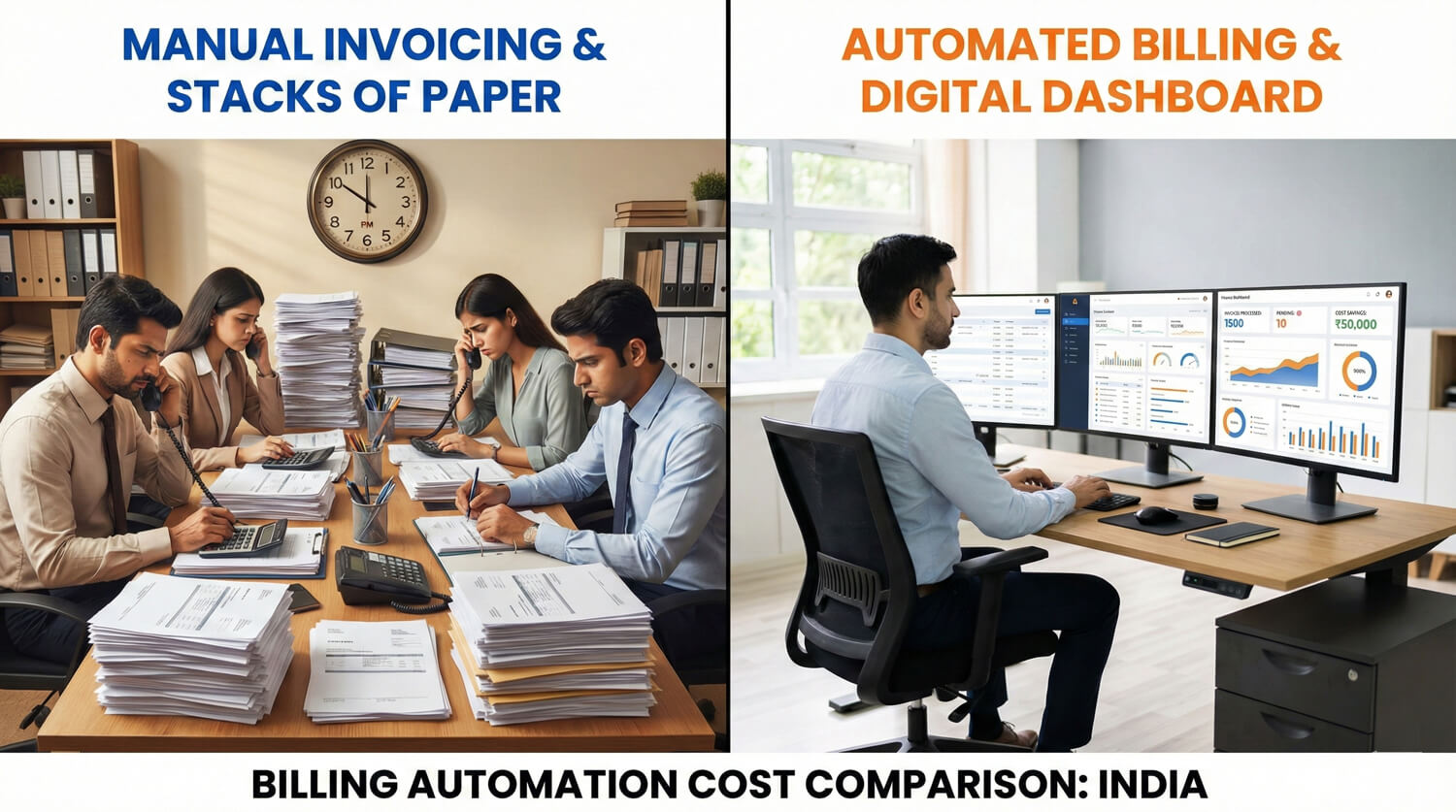
What “Billing Automation Cost” Really Means
The insight
“Billing automation cost” is only part of the ROI equation. To see true savings, consider:
-
Implementation & subscription fees
-
Staffing time currently spent on billing
-
Cost of billing errors
-
Delayed receivables costs
Example:
If your team spends 100 hours/month on billing and follow-ups, at ₹300/hr that’s ₹30,000 monthly cost – without counting payment delays or errors.
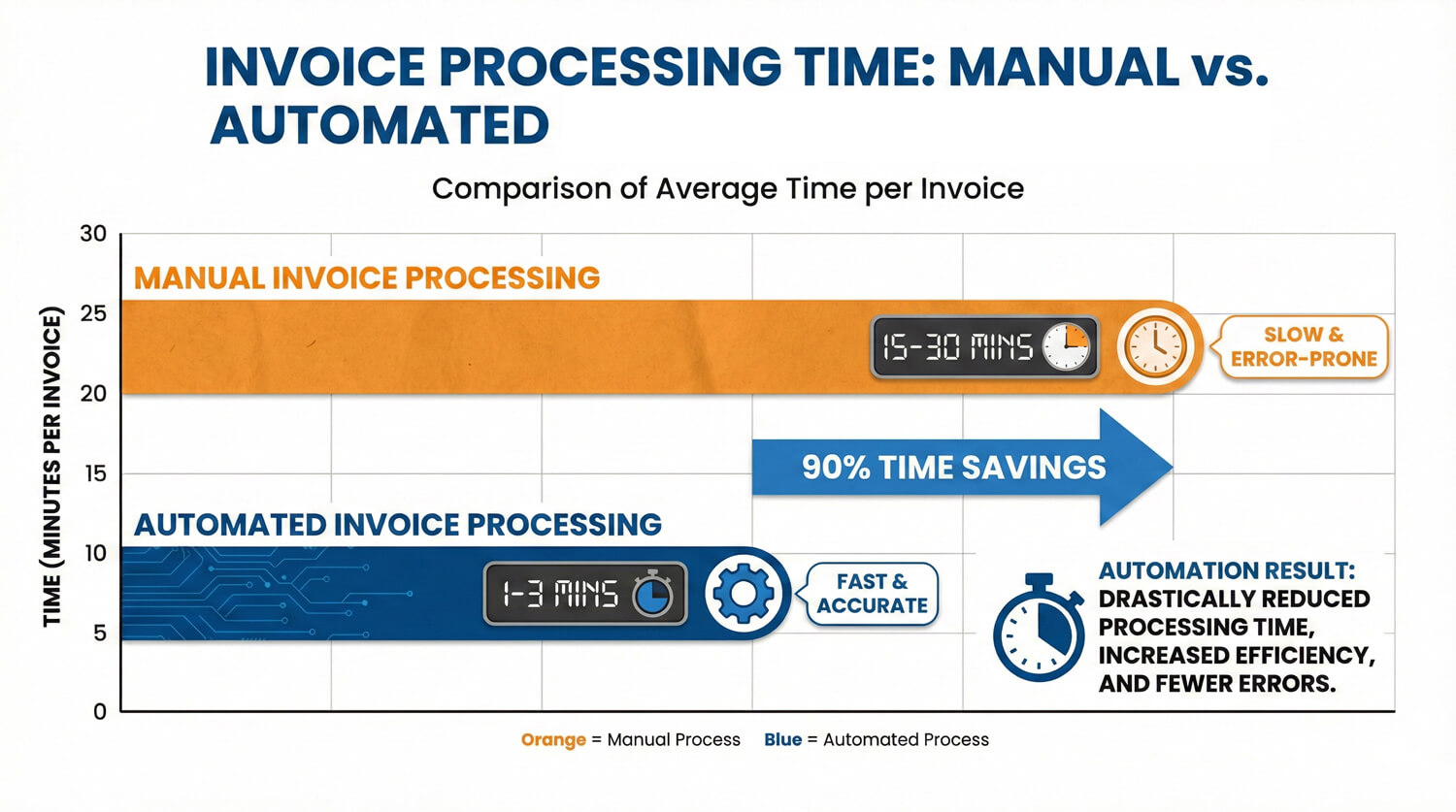
1. Billing Automation Cuts Invoice Processing Time By 60-80%
Manual invoicing involves:
✔ Creating invoices
✔ Manual GST & tax checks
✔ Emailing/printing
✔ Tracking delivery
✔ Updating accounting books
Automated systems generate, send, and record invoices instantly, saving:
- Data entry time
- Double-checks and corrections
- Reconciliation work
Example calculation
| Task | Manual | Automated |
|---|---|---|
| Invoice creation | 5 min | 30 sec |
| GST/validation | 2 min | automated |
| Sending & tracking | 3 min | automated |
| Total per invoice | 10 min | 1 min |
For 300 invoices/month, that’s a reduction from 50 hours to 5 hours.
2. Reducing Billing Errors Saves Cost + Reputation
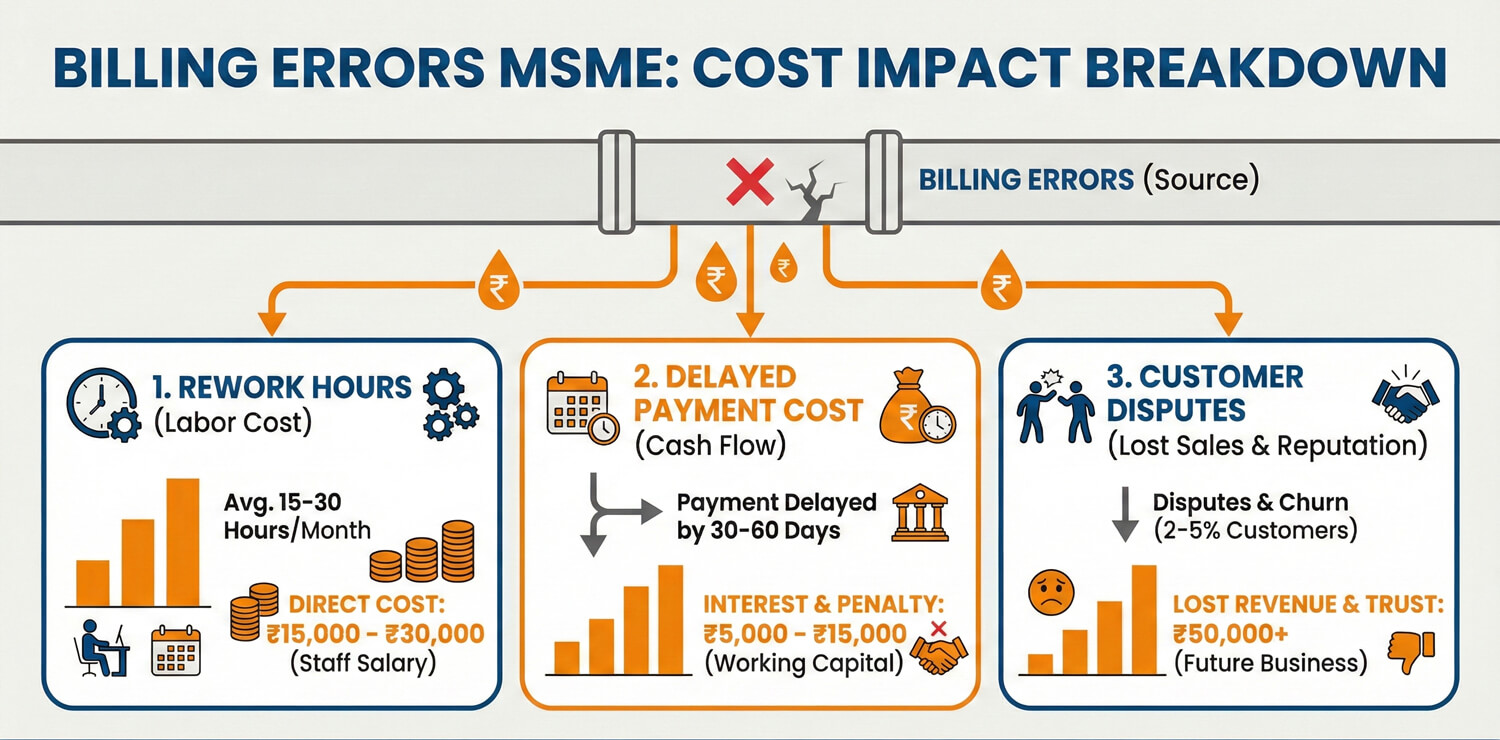
Billing errors – wrong GST, incorrect amounts, missing details ripple through to:
- Customer disputes
- Delayed payment
- Credit memos & corrections
- Team rework
Common situation:
A single billing error takes 2-4 hours to fix across teams – and often delays payment by weeks.
Automation enforces:
- Correct tax rules
- Valid data checks
- Template consistency
Estimated impact
If 10% of invoices have errors and each costs ~₹1,000 in rework + delay, avoiding them saves ₹30,000/month.
3. Faster Billing = Faster Payments = Better Cash Flow
Time to invoice matters:
- Late invoices often mean late payments
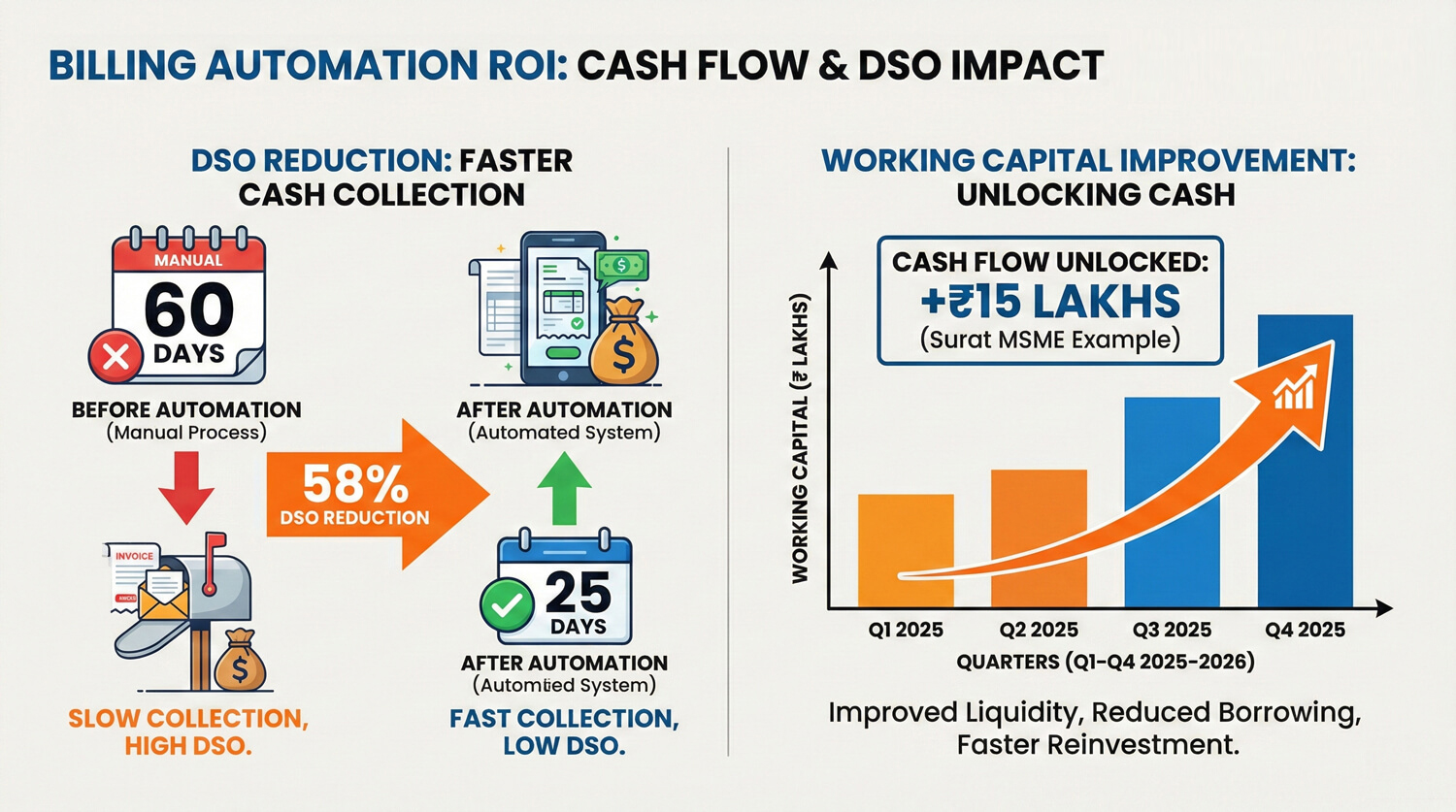
- Faster billing compresses DSO (Days Sales Outstanding)
Practical ROI link
If automating billing reduces DSO by 5-10 days, on a receivables base of ₹50 lakh that’s significant working capital freed up effectively cheaper financing.
4. Real ROI Example for an Indian SME
Let’s project a typical scenario for a ₹10 crore SME with 300 invoices/month:
Without automation
-
Team cost on billing: ₹30,000/month
-
Error rework costs: ₹30,000/month
-
Lost cash flow cost (DSO + working capital): ₹20,000/month
Total monthly cost: ₹80,000
-
Subscription/implementation: ₹20,000/month
-
Billing time: ₹5,000/month
-
Error costs near zero
Net savings: ₹55,000/month
Annualized savings: ~₹6.6 lakh and that’s conservative.
Quick Wins: Immediately Reduce Billing Load
-
Automate GST & compliance checks
Stop manual tax mistakes at the source. -
Use templated, validated forms
Reduces entry errors and query loops. -
Integrate with accounting/ERP systems
Eliminates duplicate entry and reconciliation delays.
When Manual Billing Still Makes Sense (and When It Doesn’t)
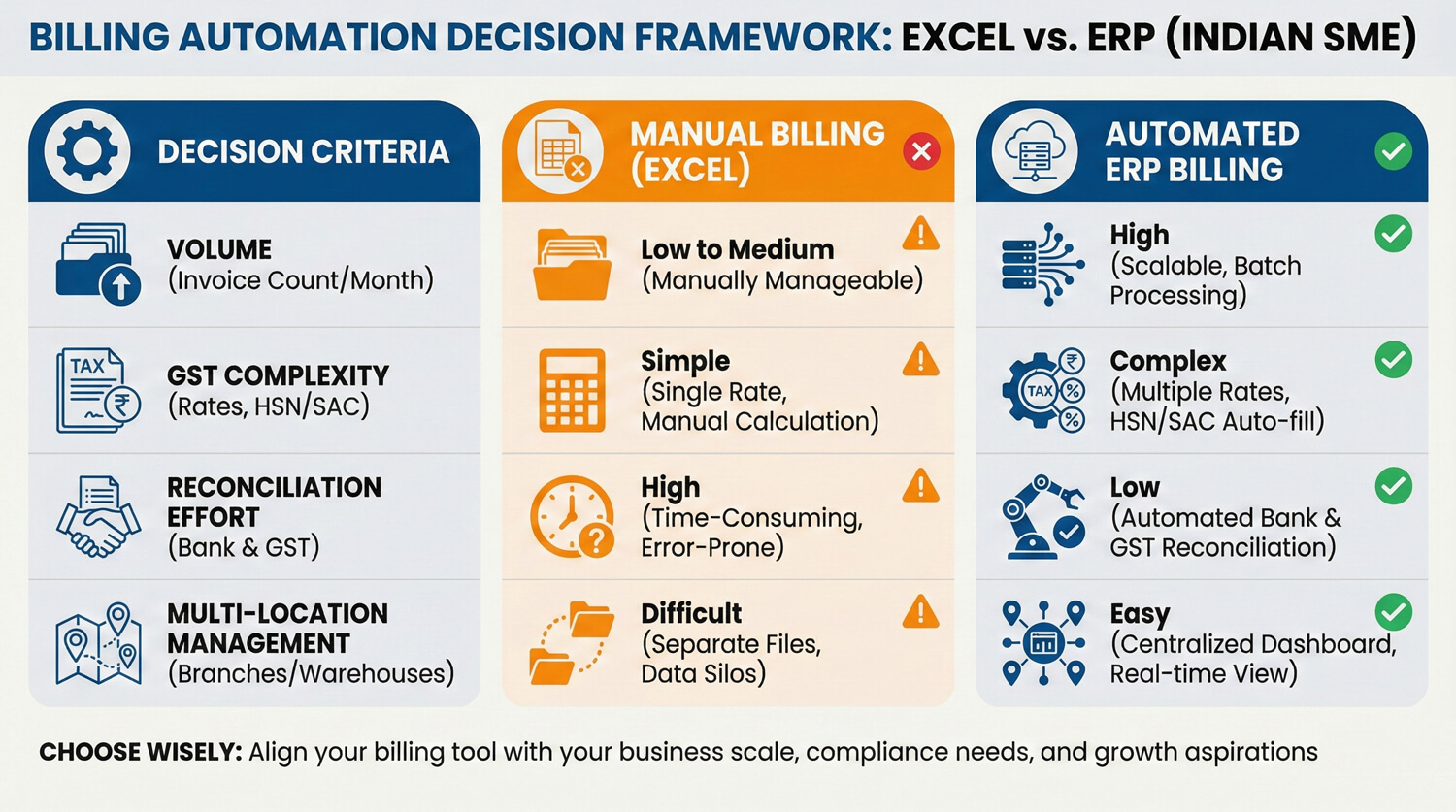
| Scenario | Manual Billing | Automation |
|---|---|---|
| <100 invoices/month | Possible | Optional |
| 200-500 invoices/month | Painful | High ROI |
| Complex tax rules | Error-prone | Strongly recommended |
| Multi-location billing | Hard | Efficient |
If you’re above 200 invoices/month with regular GST and follow-ups, automation typically pays for itself within 3-6 months.
Tools & Approaches That Actually Deliver Savings
ERP + automation
Best for integrated finance & inventory systems – eliminates siloed data work.
Smart invoicing plugins
Good for companies that want lighter automation before full ERP.
AI-based validation engines
Reduce errors and speed up GST checks.
(Services tied to ERP implementations or automation strategy can be naturally positioned here.)
What is billing automation cost?
Billing automation cost includes subscription, implementation, and integration expenses. It should be evaluated against labour savings, reduced errors, and faster payments, not in isolation.
How much can automating invoicing India reduce processing time?
Most SMEs see 60-80% time reduction, cutting hours spent on invoice creation and distribution dramatically.
Does billing automation reduce billing errors?
Yes, automation enforces tax rules and validations, reducing human errors and the need for costly rework.
Is billing automation worth it for 300 invoices/month?
At ➝300 invoices/month, automation typically pays back within 3-6 months through time, error, and cash flow savings.
How does faster billing improve cash flow?
Faster, accurate invoices lead to earlier payments and lower DSO, effectively reducing working capital costs.