


You try a SaaS tool.
It works… mostly.
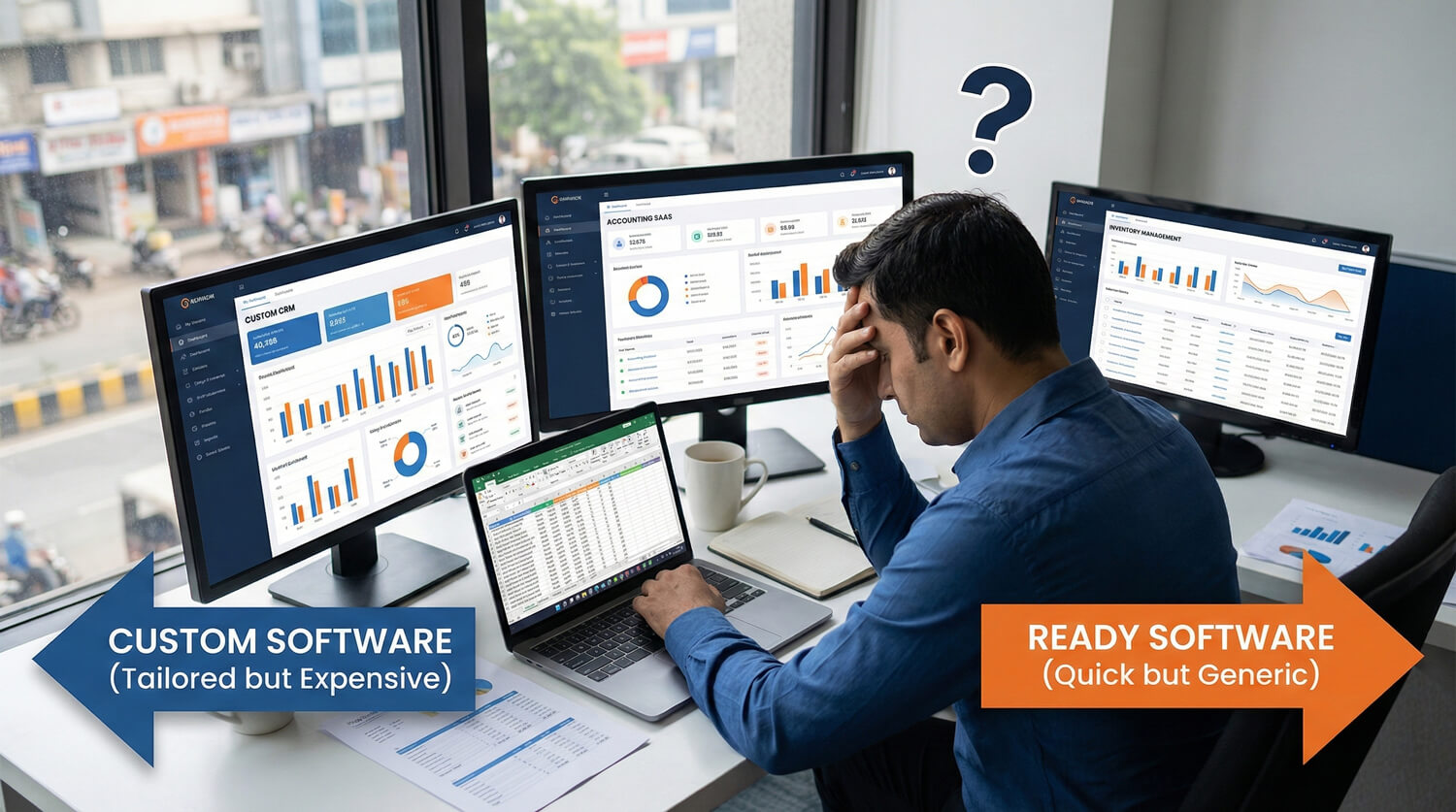
Then you create workarounds. Export data to Excel. Track approvals on WhatsApp. Maintain parallel sheets “just in case.”
This is the hidden frustration behind the custom software vs ready software debate for Indian MSMEs. The problem isn’t features. It’s workflow fit.
This guide will help you:
-
Understand when ready software is sufficient
-
Recognize when misfit becomes expensive
-
Use a practical decision framework to choose correctly
No sales pitch. Just structured clarity.
Why Ready Software Looks Attractive
Off-the-shelf tools promise:
- Quick deployment
- Lower upfront cost
- Industry templates
- Frequent updates
For many early-stage businesses, this is ideal.
When Ready Software Works Well
- Standard accounting workflows
- Basic CRM tracking
- Simple inventory control
- Limited customization needs
If your workflow matches industry standard 80%, ready software is efficient.
The issue begins when your operations sit in the remaining 20%.
Where Ready Software Starts Breaking
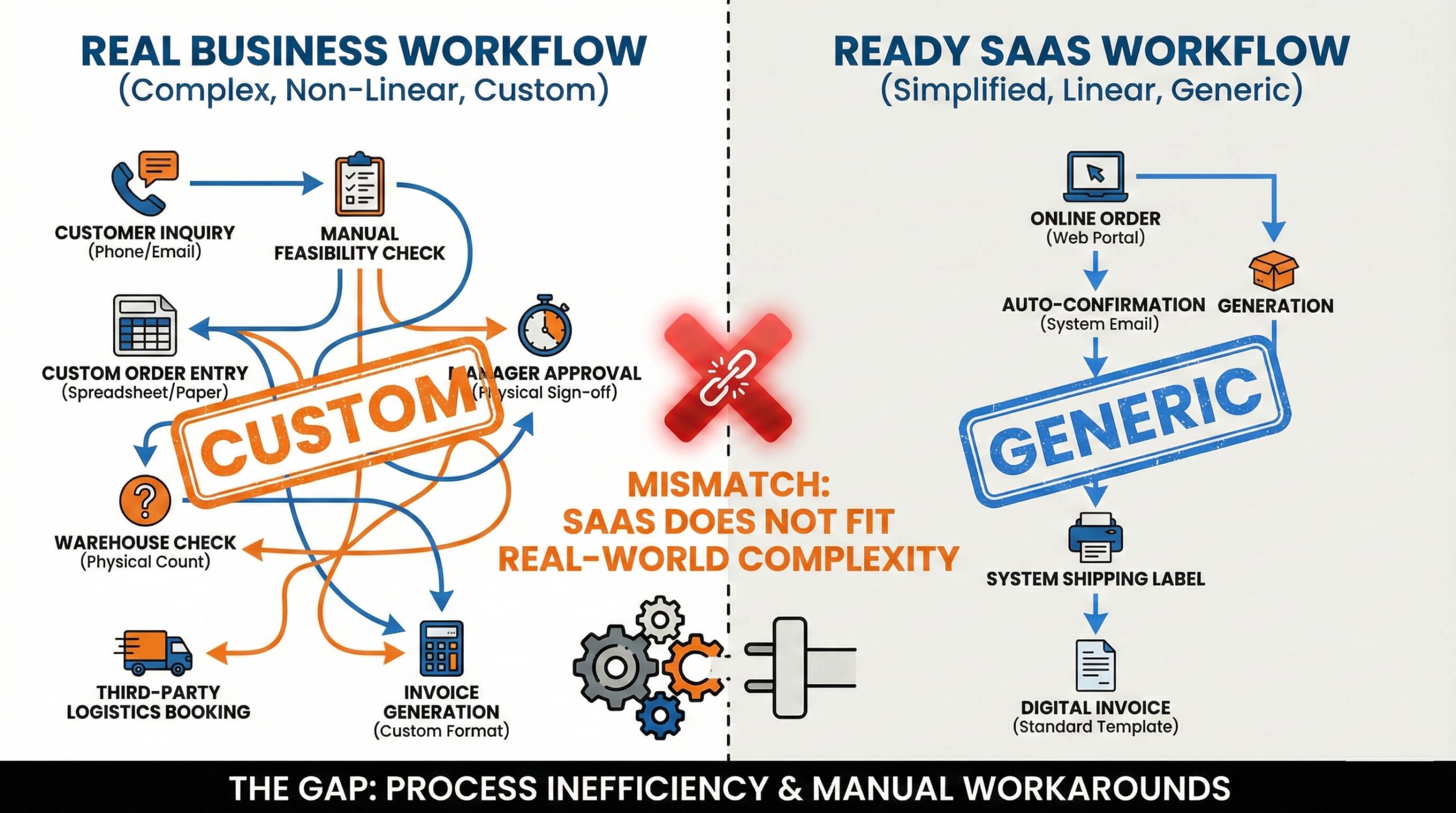
Misfit shows up subtly.
- Forced workflow changes
- Manual exports for reporting
- Parallel tracking in Excel
- Approval flows outside the system
These are early indicators in an MSME software choice dilemma.
The software may be powerful but it doesn’t reflect how your business actually runs.
What Custom Software Really Means
Custom software isn’t about building everything from scratch.
It means:
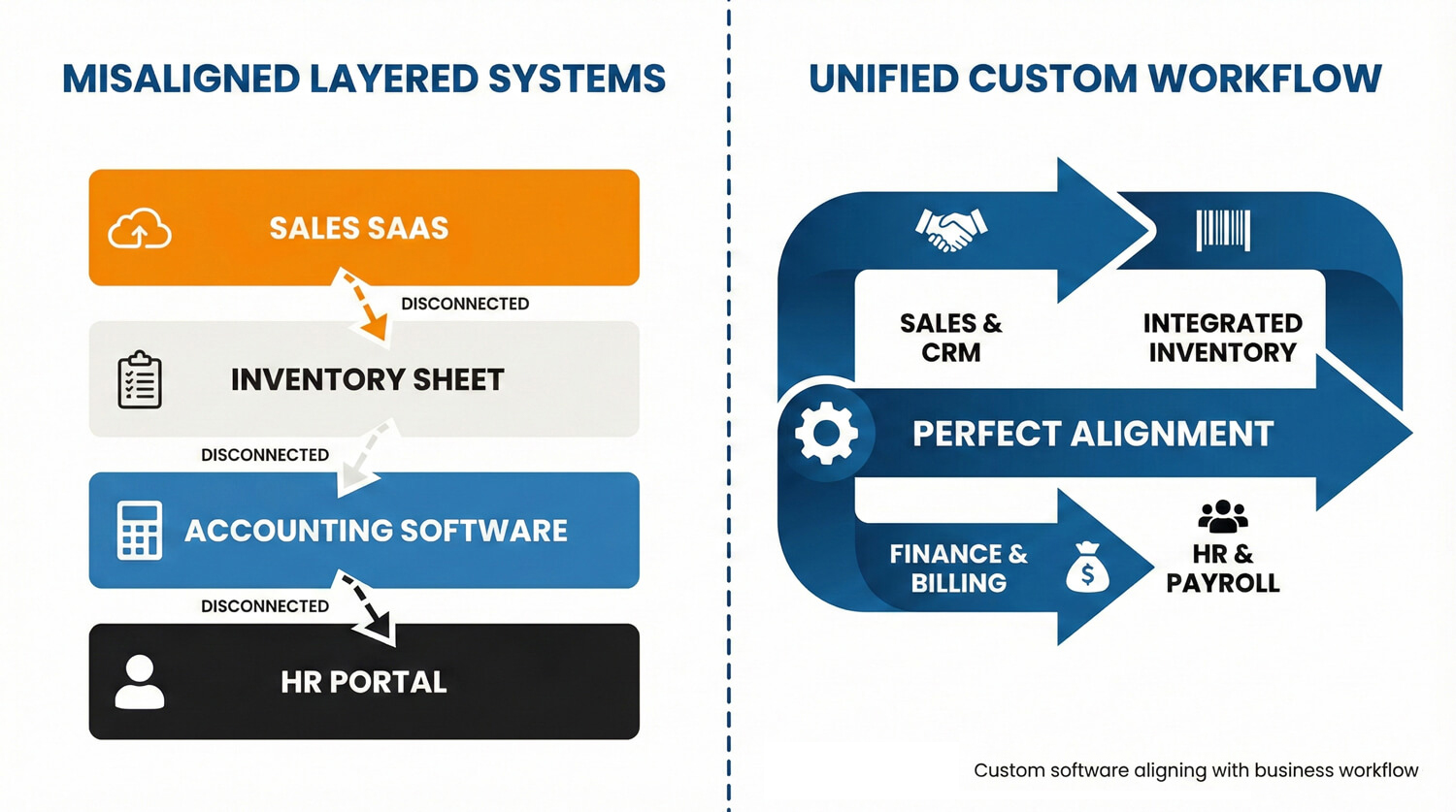
- Designing workflows around your operations
- Integrating with existing systems
- Eliminating workaround layers
- Embedding your approval logic
In short, the system adapts to your business not the reverse.
Custom Software vs Ready Software: Core Differences
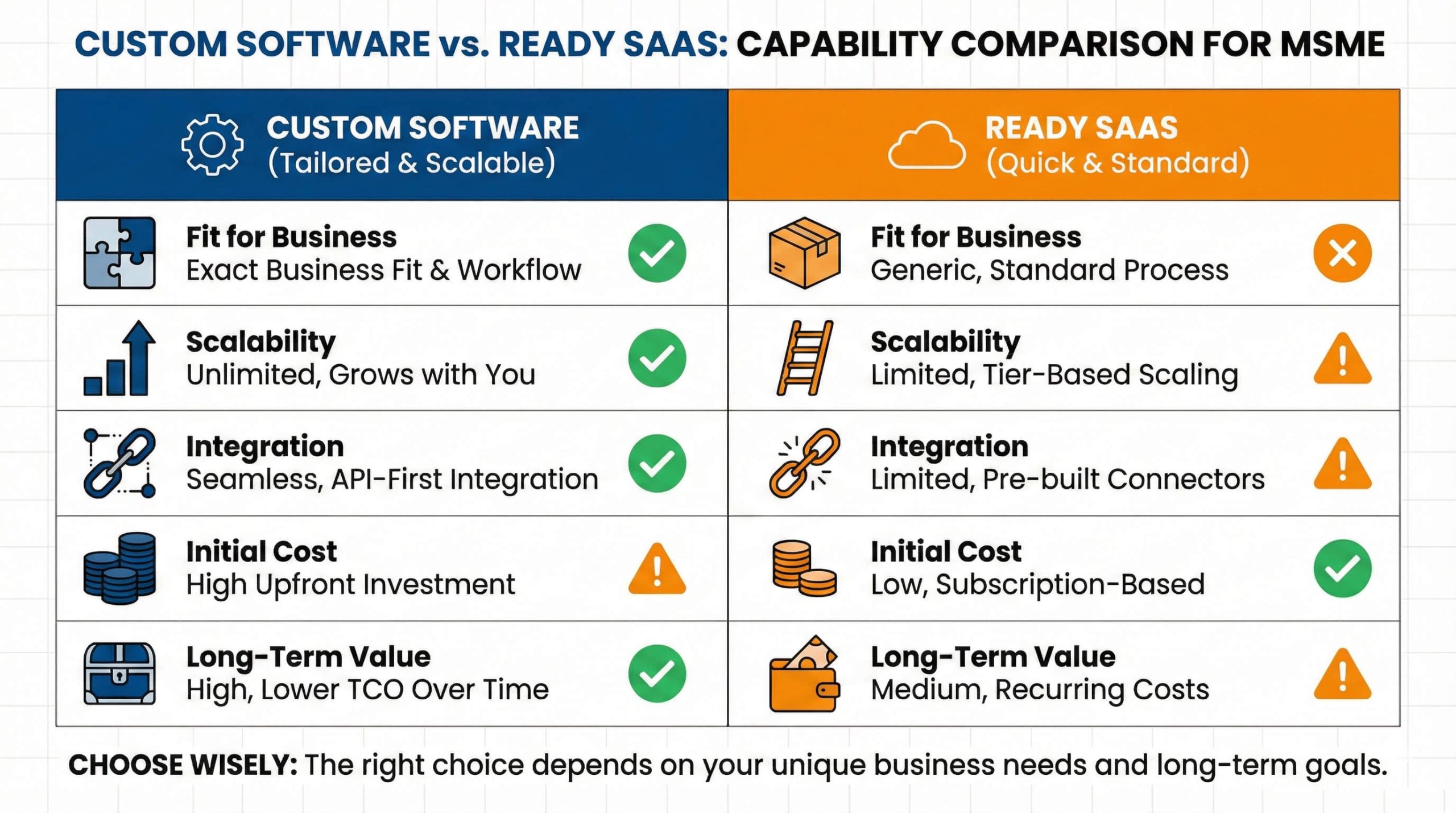
| Criteria | Ready Software | Custom Software |
|---|---|---|
| Deployment Speed | Fast | Moderate |
| Upfront Cost | Lower | Higher |
| Workflow Fit | Standardized | Tailored |
| Flexibility | Limited | High |
| Integration Depth | API-based | Native |
| Long-Term Scalability | Template-bound | Process-driven |
The correct business software decision India depends on workflow complexity not just budget.
The Hidden Cost of Tool Misfit
Most businesses evaluate:
- License cost
- Implementation cost
They rarely evaluate:
- Operational friction
- Duplicate data entry
- Reporting delays
- Employee frustration
- Process bypass behavior
When teams consistently step outside the tool to “get work done,” misfit cost compounds.
Over time, workaround systems become more complex than custom development would have been.
Scenario: Distributor Managing Multi-Layer Pricing
Using Ready Software
- Base pricing supported
- Special discounts managed manually
- Region-based variations handled in spreadsheets
- Credit control tracked outside system
Result: Frequent reconciliation and disputes.
With Custom Software
- Embedded pricing logic
- Automated credit checks
- Integrated dispatch rules
- Centralized reporting
The difference isn’t software sophistication. It’s alignment.
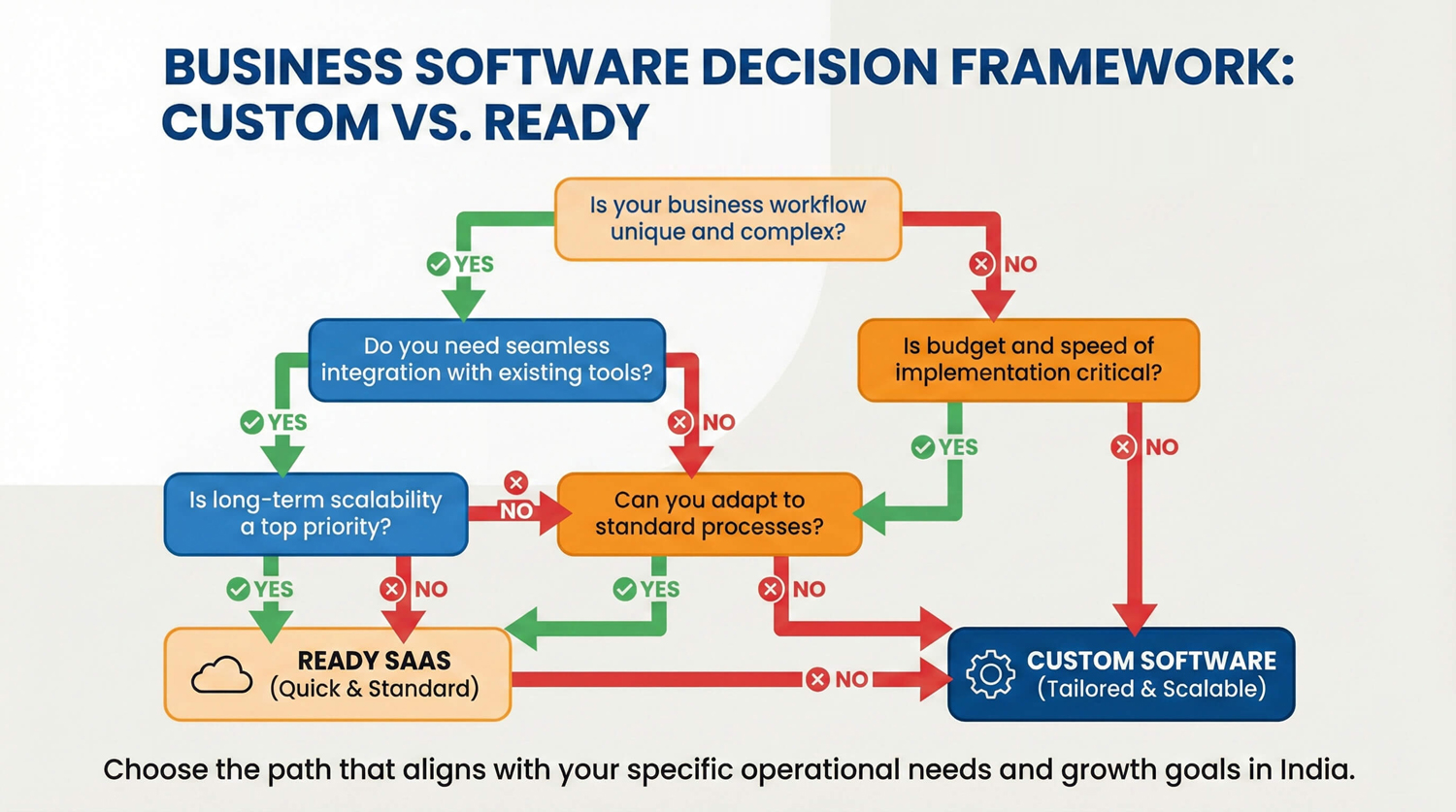
Decision Framework: Should You Choose Custom or Ready?
Answer these:
1. Workflow Uniqueness
Are your processes industry-standard or differentiated?
2. Workaround Frequency
How often do you export data or bypass the system?
3. Integration Need
Do tools need deep, real-time integration?
4. Scalability Vision
Are you planning structural expansion or incremental growth?
If:
- Workflows are standard → Ready software likely sufficient
- Workarounds are increasing → Evaluate customization
- Integration complexity is rising → Custom becomes strategic
Quick Evaluation Matrix
Use this simple scoring approach:
| Question | Yes | No |
|---|---|---|
| Multiple manual workarounds? | +1 | 0 |
| Reporting requires exports? | +1 | 0 |
| Approval logic not supported? | +1 | 0 |
| Teams resist using tool? | +1 | 0 |
Score 0-1: Ready software likely fine
Score 2-3: Hybrid solution worth exploring
Score 4: Custom software discussion justified
This makes your MSME software choice objective not emotional.
Common Mistakes MSMEs Make
Mistake 1: Choosing custom too early
Fix: Validate workflow stability first.
Mistake 2: Over-customizing ready software
Fix: Avoid forcing platform into unnatural shape.
Mistake 3: Ignoring integration architecture
Fix: Think ecosystem, not isolated tools.
What is the main difference between custom software vs ready software?
Ready software provides standardized workflows suitable for most businesses. Custom software is built around your specific operational processes, offering higher alignment and flexibility.
Is custom software always better for MSMEs?
No. If workflows are standard and complexity is low, ready software is efficient. Custom becomes valuable when misfit and workaround frequency increase.
How do I know if my software doesn’t fit?
Frequent exports, parallel Excel tracking, and off-system approvals indicate structural misalignment.
Is custom software expensive?
Upfront investment is higher, but long-term efficiency may justify it if operational friction is significant.
Can businesses combine both?
Yes. Many MSMEs use ready software for core accounting and custom applications for operations or workflow automation.